Join the UDM Hip
Follow-Up Study
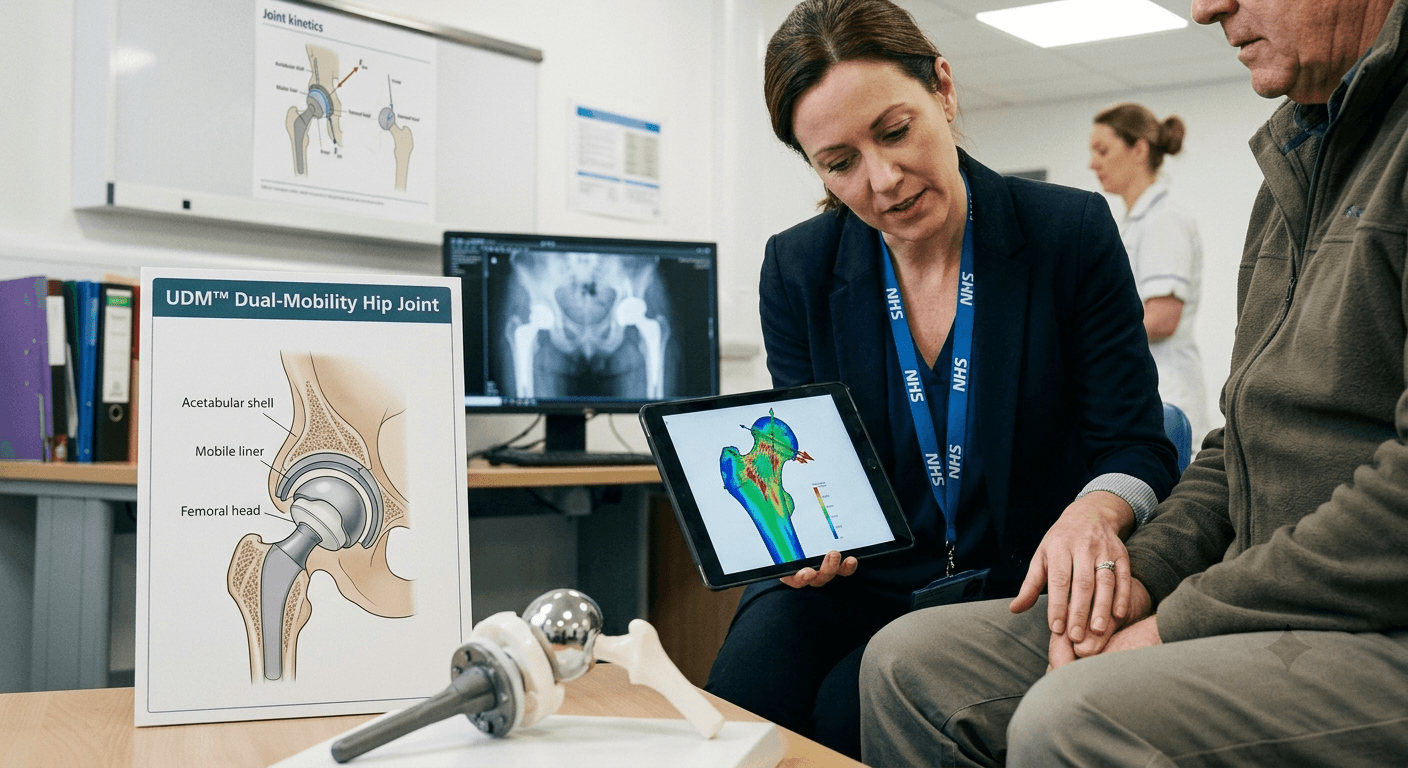
Take part in a UK clinical follow-up study of the UDM™ Hip System in patients undergoing total hip replacement. We collect patient-reported outcomes, routine imaging, and long-term clinical follow-up data to better understand implant performance, hip stability, and recovery in real-world practice.

Study sponsor: United Orthopedic Inc. The UDM™ acetabular system is part of the United Orthopedic hip portfolio and is designed as a dual mobility solution for total hip replacement.
Who Can Join
This Study
Who are we looking for?
Patients who have had, or are scheduled to have, a total hip replacement using the UDM™ Hip System.
Study Protocol: This is a prospective clinical follow-up study of an approved implant. It is not an interventional treatment study.
Hip Stability
We monitor outcomes related to hip stability, including recovery, function, and any post-operative instability events.
Patient-Reported Outcomes
We collect validated patient-reported outcomes on pain, mobility, function, and quality of life.
Implant Performance
Routine follow-up data helps assess implant position, survivorship, and overall clinical performance over time.
Why It Matters
Dual mobility systems are increasingly used to reduce the risk of instability after total hip replacement, and this study adds valuable UK follow-up data from real clinical practice.
Interested in taking part?
Advancing Stability in
Total Hip Replacement
Total hip replacement is one of the most successful procedures in modern orthopaedics, but instability and dislocation remain important causes of early failure and patient dissatisfaction. Dual mobility technology has been developed to improve hip stability while preserving range of motion.
The Unmet Need
Although total hip replacement is highly effective, some patients remain at risk of instability, dislocation, or functional limitation after surgery.
UDM™ Technology
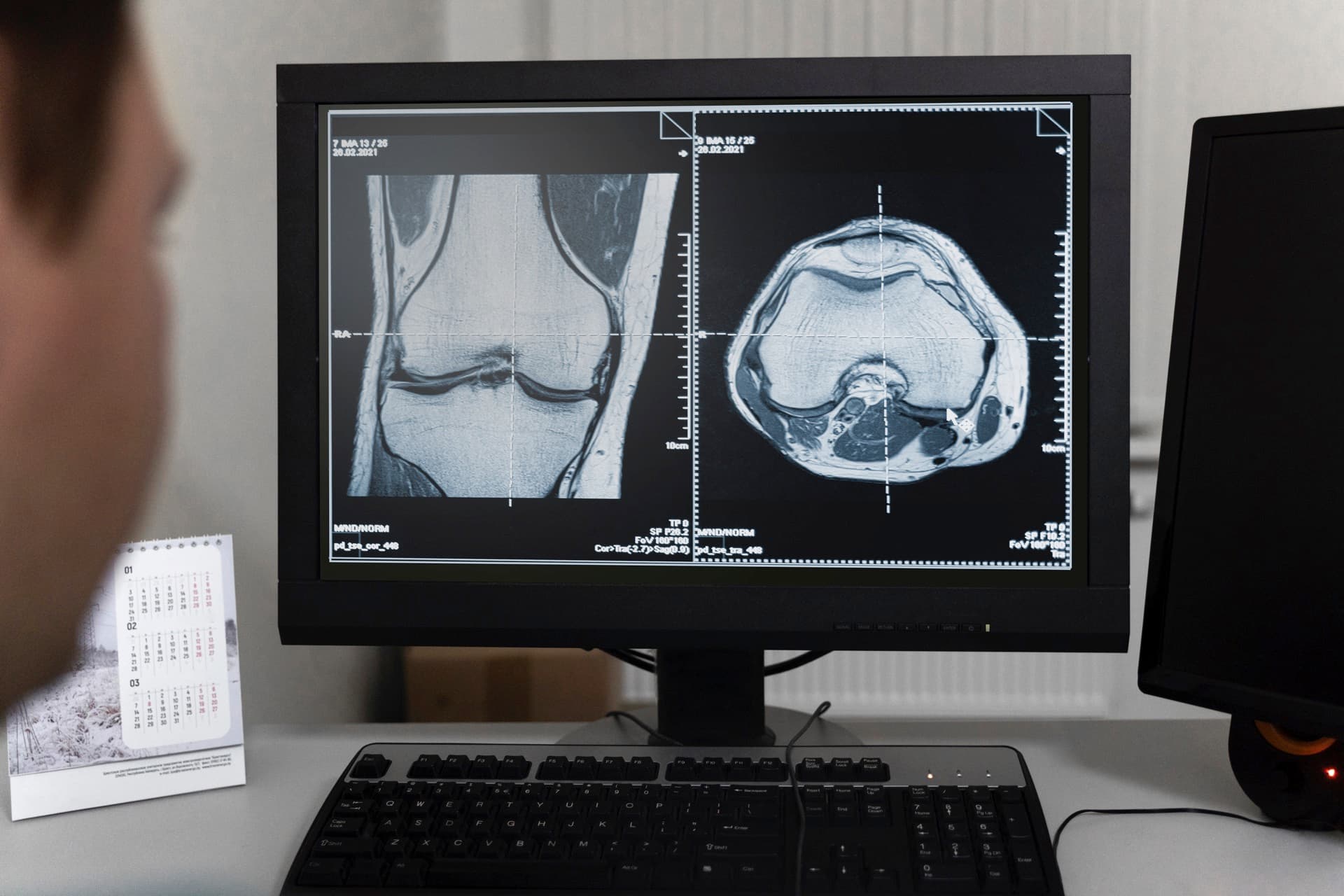
A dual mobility acetabular design featuring a cobalt chrome cup and a mobile polyethylene liner that articulates within the cup while capturing the femoral head — intended to increase jump distance and range of motion in order to reduce the risk of impingement and dislocation.
UK-Specific Evidence
There is ongoing international interest in dual mobility total hip replacement, but real-world UK clinical follow-up data remains valuable for understanding longer-term function, safety, and implant performance in routine practice.
Study Objectives
PROMs
Validated patient-reported outcome measures focusing on pain, mobility, daily function, and satisfaction.
Radiographic Analysis
Routine structured X-rays to monitor implant position, fixation, and any relevant changes over time.
Safety and Longevity
Long-term follow-up of survivorship, complications, and post-operative safety outcomes.
Evidence Base
Building a longitudinal UK dataset to inform future clinical decision-making in dual mobility total hip replacement.
Interested in taking part?
Your Journey in Research
The study is designed to fit around routine follow-up care as much as possible.
Questionnaires
You will complete validated hip questionnaires about pain, movement, activity, and satisfaction.
Routine X-rays
Standard follow-up hip X-rays are collected to assess implant position and performance.
Clinical Data
With your consent, the research team records relevant clinical information securely for study analysis.
Interested in taking part?
Study Journey
A structured follow-up schedule is used to track recovery and implant performance over time.
Screening / Baseline
- Informed consent and eligibility verification.
- Collection of clinical details and baseline questionnaires.
Recovery Milestones
Hip pain, mobility, and function questionnaires.
Routine standard X-rays as part of normal follow-up care.
Progress Review
Review of function, recovery progression, and any clinical events.
Final Review
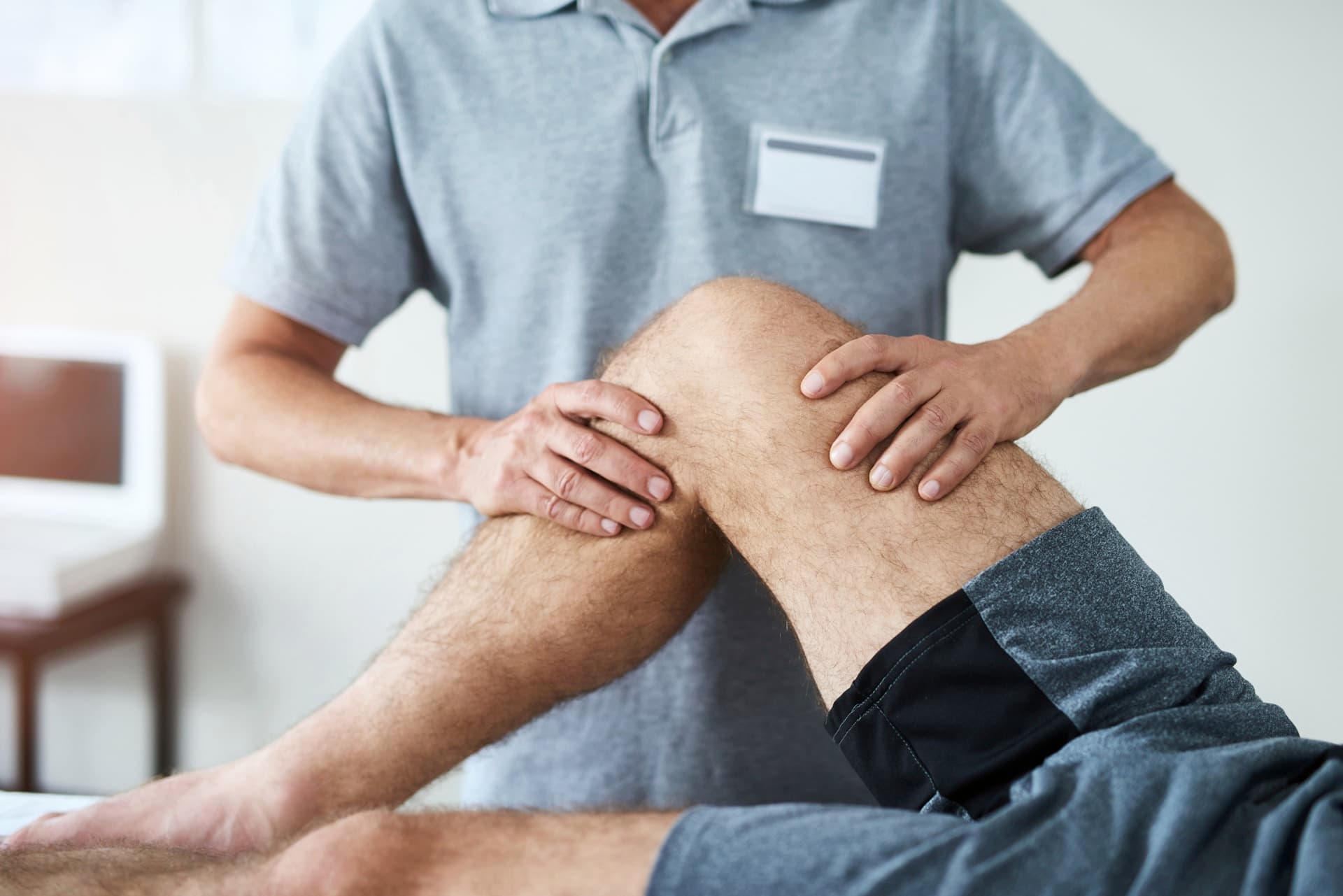
Final review of implant survivorship, quality of life outcomes, and long-term hip function.
Note: These visits are intended to align with standard NHS or private follow-up pathways wherever possible. In most cases, the study adds structured questionnaires and data collection to routine appointments.
Interested in taking part?
Participation Criteria
Please review the key eligibility requirements before registering your interest.
Who Can Take Part
General Inclusion Requirements
Age Requirement
Participants must be aged 21 years or over at the time of recruitment.
Clinical Pathway
Scheduled for, or already treated with, a primary or revision total hip replacement using the UDM™ Hip System. The UDM system is indicated for acetabular reconstruction in primary or revision THA.
Commitment to Care
Ability to provide informed consent and willingness to participate in follow-up data collection.
Exclusion Criteria
- Active joint infection or other clinical contraindications.
- Conditions that may prevent meaningful follow-up.
- Inability or unwillingness to comply with study procedures.

Our research team is available to discuss eligibility in more detail during your clinic visit.
Why Take Part
Your treatment does not change, but your follow-up data can help improve understanding of long-term outcomes after dual mobility total hip replacement.
Advancing Surgical Excellence
Contribute to the evidence used to assess long-term performance of dual mobility hip replacement systems.
Empowering Future Patients
Help future patients and clinicians make better-informed decisions.
Defining Functional Longevity
Support a better understanding of hip stability, function, satisfaction, and survivorship over time.

Risk Assessment and Transparency
This is a non-interventional follow-up study. The main considerations are time, questionnaires, and routine imaging.
Participation Effort
Minor time commitment for completing detailed questionnaires and attending routine follow-up.
Routine Imaging
Minimal exposure to ionising radiation from standard X-rays, typically already part of normal clinical care.
Surgical Context
Standard risks of total hip replacement are associated with the surgery itself, not the research procedures.
Non-Interventional Guarantee
Research participation does not involve experimental drugs, injections, or additional invasive procedures.
Interested in taking part?
Governance & Oversight
The study is run under formal governance and data protection standards.
Data Protection
Managed in line with UK GDPR and the Data Protection Act.
GCP Compliance
Managed in accordance with Good Clinical Practice principles.
Sponsorship
Sponsored by United Orthopedic Inc. in partnership with MSK Doctors.
Interested in taking part?
Research Leadership
Sponsor and clinical partner for this study.
United Orthopedic Inc.
Sponsor of the study and manufacturer of the UDM™ system.
MSK Doctors
Clinical partner responsible for patient oversight and study data collection.
